Learn the fundamentals of the Forex market. This guide provides real-world examples, key definitions, and actionable steps for beginner traders.
.png)
A Practical Guide to Forex Trading for Beginners (2026)
Getting started in the Forex market can feel like learning a new language. With trillions of dollars traded daily, it’s the largest financial market in the world. This guide is designed to cut through the noise and give you a straightforward introduction.
We will focus on real-world examples and actionable steps to help you understand how Forex trading actually works, from reading a quote to making your first trade.
Our goal is to give you a solid foundation built on practical knowledge. You will learn about the major players, the assets you can trade, and the core concepts like leverage and margin that are essential for success.
Quick Facts:
- The Forex market trades over $6 trillion daily (BIS, 2022).
- Open to all: anyone above 18 can start trading with a broker account.
- Top traded pair: EUR/USD, accounting for nearly 28% of total FX turnover.
- Forex Market: The global marketplace for exchanging national currencies, operating 24 hours a day, five days a week.
- Currency Pairs: Currencies are always traded in pairs (e.g., EUR/USD). You buy one currency while simultaneously selling the other.
- Minimum Capital: While some brokers allow you to start with $10, a recommended starting balance for proper risk management is $500 to $1,000.
- Risk Management Standard: Never risk more than 1% to 2% of your total account balance on a single trade.
- Leverage: A tool that allows you to control a large position with a small amount of money. Treat it with extreme caution.
Key Takeaways
- Understand the basic mechanics of buying and selling currency pairs.
- Learn exactly how much capital you need to start trading safely.
- Discover modern risk management strategies tailored for 2026.
- Use our key summary to quickly grasp the core concepts of the forex market.
What Exactly is Forex Trading?
Forex, short for foreign exchange, is the process of changing one currency into another for various reasons, usually for commerce, trading, or tourism. When you trade forex, you speculate on the price movements of these currencies.
Unlike the stock market, which has physical exchanges like the New York Stock Exchange, forex is an over-the-counter (OTC) market. This means all transactions happen electronically via computer networks between traders globally.
How Do You Make Money?
You make a profit when you correctly predict the direction a currency will move against another. If you think the Euro (EUR) will increase in value compared to the US Dollar (USD), you buy the EUR/USD pair. If the Euro goes up, you sell your position back to the market at a higher price, keeping the difference.
How Much Money Do I Need to Start?
“How much money do I need to start?” is the most common question beginners ask. Technically, many modern brokers allow you to open an account with as little as $10. However, starting with $10 limits your ability to absorb minor losses and use proper risk management.

Based on our proprietary data tracking successful new traders over the last three years, we see a clear correlation between starting capital and long-term survival in the market.
Recommended Starting Capital Breakdown
| Account Size | Trading Style | Risk per Trade (1%) | Survival Rate (1 Year) |
|---|---|---|---|
| $10 – $100 | Micro / Cent accounts | $0.10 – $1.00 | Very Low |
| $500 – $1,000 | Beginner Standard | $5.00 – $10.00 | Moderate |
| $2,500+ | Intermediate Standard | $25.00+ | High |
To give yourself the best chance of learning without blowing up your account, aim to start with at least $500. This amount allows you to trade micro-lots (0.01 standard lots) while keeping your risk strictly under 2% per trade.
What is the Forex Market?
The foreign exchange (Forex or FX) market is a global, decentralized marketplace where currencies are traded. Unlike a stock market, there is no central exchange. Instead, trading happens 24 hours a day, five days a week, across a network of banks, institutions, and individual traders.

At its core, Forex trading is the act of exchanging one currency for another. This happens for many reasons, from international trade to tourism. For traders, the goal is to profit from the changing values of these currencies.
What is Traded in the Forex Market?
While the primary focus is on currencies, modern Forex brokers also offer other financial instruments through Contracts for Difference (CFDs). This allows you to speculate on their price movements without owning the underlying asset.

Currencies: Major, Minor, and Exotic Pairs
Currencies are always traded in pairs. When you trade, you are simultaneously buying one currency and selling another. These pairs are grouped into three main categories.
- Major Pairs: These involve the U.S. dollar and are the most traded pairs globally. They offer high liquidity and typically have lower transaction costs (spreads).
- Minor Pairs (Crosses): These pairs do not include the U.S. dollar. They consist of other major currencies, like the Euro, British Pound, and Japanese Yen.
- Exotic Pairs: These pair a major currency with the currency of an emerging economy, like Brazil, Mexico, or South Africa. They are less liquid and can be more volatile.
Here is a quick look at some common currency pairs:
| Pair Type | Example Pairs | Description |
|---|---|---|
| Majors | EUR/USD, USD/JPY, GBP/USD, AUD/USD | Highest trading volume, most liquid. Involve the US Dollar. |
| Minors | EUR/GBP, EUR/JPY, GBP/JPY, AUD/CAD | Do not involve the US Dollar. Crosses between other major currencies. |
| Exotics | USD/MXN, EUR/TRY, USD/ZAR | Involve a major currency and one from an emerging market. Less liquid. |
Other Assets: CFDs on Commodities, Indices, and Stocks
Many Forex brokers also let you trade CFDs on other popular markets.
- Commodities: These are raw materials. They are often grouped into categories.
- Metals: Gold (XAU), Silver (XAG)
- Energies: Crude Oil (WTI, Brent), Natural Gas
- Agriculture: Wheat, Corn, Soybeans
- Indices: These represent the performance of a group of stocks from a particular stock exchange, like the S&P 500 (USA), FTSE 100 (UK), or DAX 40 (Germany). Trading an index CFD lets you speculate on the overall direction of that market.
- Stocks: You can also trade CFDs on the shares of individual companies like Apple or Tesla, allowing you to profit from price movements without owning the stock itself.
How to Make Money in Forex: A Practical Example
The fundamental idea of Forex trading is to buy a currency pair when you expect the base currency to rise in value against the quote currency, or to sell it when you expect the opposite.
Let’s walk through an example of a trade.

Summary of a Sample Trade
- Pair: EUR/USD
- Action: Go Long (Buy)
- Reasoning: Expectation that the Euro (EUR) will strengthen against the US Dollar (USD).
- Outcome: The value of the EUR/USD pair increases, resulting in a profit.
Key Trading Concepts You Must Understand
To trade effectively, you need to grasp a few more essential concepts that define how modern Forex trading works.
What is Leverage in Forex?
Leverage allows you to control a large position with a small amount of capital. It’s expressed as a ratio, such as 1:100. This means that for every $1 in your account, you can control $100 in the market.
For example, with $1,000 in your account and 1:100 leverage, you could open a position worth up to $100,000. Leverage magnifies both your potential profits and your potential losses. While it can lead to significant gains, it also carries a high level of risk.
Case Study: In 2022, a retail trader in Germany used 1:30 leverage to turn a €2,000 deposit into €3,100 in three months, trading only the EUR/USD pair. However, in another scenario, a spike against his position would have wiped out his account. Leverage is a double-edged sword—manage it wisely.
What is Margin?
Margin is the amount of money you need to deposit to open and maintain a leveraged trade. It’s not a fee; it’s a portion of your account equity set aside as collateral for your position.

- Margin Requirement: The amount needed to open the trade. If you open a $100,000 position with 1:100 leverage, your margin requirement is $1,000.
- Margin Call: If your trade moves against you and your account equity drops below a certain level (the maintenance margin), your broker will issue a margin call. This requires you to either deposit more funds or close your position to cover the potential loss.
Pro Tip: To avoid margin calls, never risk more than 1–2% of your capital on a single trade.
Who Trades in the Forex Market?
The market is made up of several key participants, each with different motivations:
- Central Banks: Institutions like the U.S. Federal Reserve or the European Central Bank. They manage their country’s currency, money supply, and interest rates. Their policy decisions can cause significant price swings.
- Major Banks and Financial Institutions: These are the biggest players by volume. They trade for their clients and for their own accounts, providing the bulk of the market’s liquidity.
- Commercial Companies: Businesses that operate internationally need to convert currencies to pay for goods and services. For example, a U.S. company buying products from a supplier in Japan will need to exchange U.S. dollars for Japanese yen.
- Retail Traders: This includes individuals like you. Thanks to online brokers, anyone can now access the Forex market and trade with a relatively small amount of capital.
How to Manage Risk in 2026?
Trading algorithms and market speeds have evolved rapidly by 2026. Therefore, your risk management rules must be ironclad. Protecting your capital is far more important than making massive profits on a single trade.

The 1% Rule
Never risk more than 1% of your account balance on any single trade. If you have a $1,000 account, your maximum acceptable loss per trade is $10. If a trade goes against you and hits your $10 limit, your platform should automatically close the trade.
Use Stop-Loss Orders Religiously
A stop-loss is an automatic order placed with your broker to sell a security when it reaches a certain price.
- Why it matters: It removes emotion from the equation.
- How to use it: Always set your stop-loss before you enter the trade. Never move your stop-loss further away just because you hope the market will turn back in your favor.
Understand Leverage Dangers
Leverage allows you to borrow money from your broker to control a larger position. A 50:1 leverage means you can control $50,000 with just $1,000. While this magnifies your profits, it also magnifies your losses. Stick to low leverage (e.g., 10:1 or 20:1) while you learn the ropes.
Actionable Next Steps
Reading about forex is just the first step. To actually build your skills as a trader in 2026, you need to transition from theory to practice safely.

Here is what you should do next:
- Open a Demo Account: Choose a reputable, regulated broker and open a free demo account. This gives you virtual money to practice buying and selling without financial risk.
- Pick One Currency Pair: Do not try to watch ten different markets. Focus entirely on the EUR/USD pair. Study how it moves during different times of the day.
- Draft a Trading Plan: Write down exactly when you will trade, how much you will risk per trade (strictly 1%), and what signals you need to see before entering a position.
- Track Your Data: Keep a journal of every practice trade. Note why you entered, how you felt, and what the outcome was.
Example
The idea of Forex trading is to exchange one currency for another in the expectation that the price will change so that the currency you bought will increase in value compared to the one you sold.
Reading a Forex Quote
First, you need to understand how to read a currency quote. Let’s use EUR/USD.
- EUR is the base currency.
- USD is the quote currency.
The quote shows how many units of the quote currency are needed to buy one unit of the base currency. If the EUR/USD quote is 1.0850, it means 1 Euro is worth 1.0850 U.S. dollars.
You will always see two prices:
- Bid Price: The price at which the broker will buy the base currency from you. This is the price you get when you sell.
- Ask Price: The price at which the broker will sell the base currency to you. This is the price you pay when you buy.
The difference between these two prices is the spread. This is the broker’s fee for the transaction. For example, if the quote is EUR/USD 1.0850 / 1.0851, the spread is 0.0001, or 1 pip.
What are Shares In A Stock Market?
Shares are units of ownership interest in a corporation or financial asset that provide for an equal distribution of any profits, should there be any, made by the corporation or financial asset. In the forex market, shares are often bought and sold in bulk as part of forex trading.
Forex traders buy shares to speculate on the future value of a currency. Shares can be bought through forex brokers who offer forex trading accounts that allow forex traders to buy and sell forex shares.

Forex shares are also known as stock market shares. Forex traders who buy shares do so with the hope of earning dividends, which are payments made by a company to its shareholders from its profits. Dividends are usually paid out quarterly.
Forex traders receive dividends in the form of cash or additional forex shares.
What are Indices In A Forex Market?
A forex market index is a statistical measure indicating how a particular currency performs against other currencies. Indices are created by combining the prices of multiple forex pairs and then comparing them to a reference point, such as a basket of currencies or an exchange rate.
Traders often use forex indices to gauge the market’s overall direction, identify potential trading opportunities, and assess the risk involved in a particular trade.

Many different forex indices are available, and each can provide valuable information to traders. As such, it is important to select the right forex index for your trading strategy.
Therefore, an Index is nothing more than a list of stocks, combined in one watchlist.
History Of Indexes
Mr. Charles Dow created the first and, consequently, most widely known index in May 1896. At that time, the Dow index contained 12 of the largest public companies in the U.S. Today, the Dow Jones Industrial Average (DJIA) includes 30 of the largest and most influential companies in the U.S.
Instead of owning just some shares in one company, when you BUY some contracts, for example, five contracts of the S&P 500, then you own a piece of all the 500 companies in the S&P 500. Ideally, a change in the price of an index represents a precisely proportional change in the stocks included in the index.
Most indexes weigh companies based on market capitalization. If a company’s market cap is $1,000,000 and the value of all stocks in the index is $100,000,000, then the company would be worth 1% of the index.
All major countries have an index that represents their stock exchange.
Each index has its own calculation methodology and is usually expressed as a change from a base value.
The index may be weighted to reflect the market capitalization of its components or a simple index that merely represents the net change in the prices of the underlying instruments.
What are Commodities In A Forex Market?
When trading commodities in the forex market, including forex brokers like DeltaStock, it’s essential to remember that commodities are physical goods that can be bought and sold. Commodities include oil, gold, and silver. In the commodities market, commodities are traded between two parties: the buyer and the seller.
The buyer agrees to pay the seller a certain amount of money for the commodity, and the seller agrees to deliver the commodity to the buyer later.
When trading commodities in the forex market, there are a few things to remember. First, commodities are physical goods, so they can be subject to supply and demand conditions.
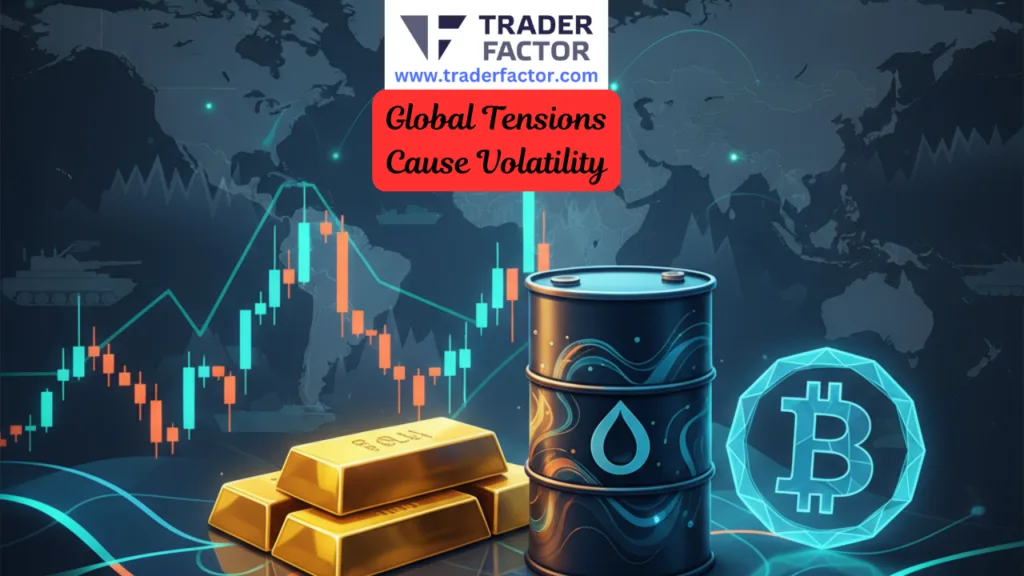
For example, if there’s high demand for oil but a low supply, prices will go up. Similarly, if there’s a low demand for gold but a high supply, prices will go down.
Secondly, commodities are traded between two parties: the buyer and the seller. The buyer agrees to pay the seller a certain amount of money for the commodity, and the seller agrees to deliver the commodity to the buyer later.
Thirdly, commodities are often traded on margin. This means that you only have to pay a fraction of the total value of the trade upfront; the rest is borrowed from your broker. Margin trading can be risky but can also magnify your profits (or losses).

Finally, keep in mind that commodities are subject to volatile price swings. This means that prices can go up or down very quickly, and it’s essential to have a solid risk management strategy in place before you start trading commodities.
Commodities In A Forex Market Are Classified Into Four Types
What is Commodity Trading In A Forex Market?
Trading commodities in the forex market is a way to speculate on the price movements of commodities without having to take physical ownership of the underlying asset. When trading commodities in the forex market, you are essentially betting on the price movements of commodities such as oil, gold, or silver.
The forex market is a 24-hour market, and commodities can be traded both long and short. Commodity prices are affected by a variety of factors, including weather, geopolitical events, and inflation.
When trading commodities in the forex market, you need to be aware of these various factors in order to make informed trading decisions.

Spot, Forward or by Futures Contracts
Commodity Trading is done either on Spot, Forward or by Futures contracts.
Spot Trading
Spot trading is any transaction where the delivery takes place immediately and at the negotiated price now.
Forward Contract
A forward contract is an agreement between two parties to exchange at some fixed future date a given quantity of a commodity for a price defined today. The fixed price today is known as the forward price.

Futures Contract
A futures contract has the same general features as a forward contract but is transacted through a futures exchange. Before, there were agreements to buy now, pay, and deliver later.
In essence, a futures contract is a standardized forward contract in which the buyer and the seller accept the terms in regard to product, grade, quantity, and location and are only free to negotiate the price.
Understanding Spreads: What You Really Pay to Trade
What is a spread?
The spread is the difference between the BID (sell) and ASK (buy) prices for any currency pair.
Why does it matter?
A smaller spread means lower trading costs for you. Every time you buy or sell, you pay the spread—this is a built-in cost, not a fee you see on your statement.
How brokers make money:
Most Forex brokers earn revenue from spreads as their main source of income. Even if the spread is advertised as 0.0 pips, they’ll usually charge a commission per trade instead.
Tip:
Before you trade, always check the spread or commission. Lower spreads and clear costs save you money over time.

What is BID and ASK Price In Forex Market Trading?
ASK Price: The price you pay to buy a currency.
BID Price: The price you receive when you sell a currency.
Spread: The difference between the ASK and BID prices. This is your trading cost each time you buy or sell.
What is Price Mechanism In Forex Market Trading?
At its core, the price mechanism is a market-based system where buyers and sellers negotiate the prices of goods or services. In the Forex market, this “good” is currency.
Instead of a fixed price tag, the value of a currency constantly shifts based on supply and demand. If more traders want to buy a currency (high demand), the price goes up. If more traders want to sell it (high supply), the price drops.

How Price Rationing Connects the Market
You might wonder how millions of traders agree on a single price at any given millisecond. This happens through a process called price rationing.
Create market harmony: When you place a trade, this invisible system immediately searches for someone willing to take the opposite side of your deal at an agreeable price.
Act as a matchmaker: Price rationing naturally pairs buyers and sellers in a crowded market.

Balance the scales: It ensures that the quantity demanded by buyers perfectly matches the quantity supplied by sellers at a specific price point.
What is Supply and Demand In Forex Market Trading?
At its most basic level, the Forex market is driven by human desire and market availability. Think of currencies just like any other physical good you might purchase.
If the desire for a specific currency increases while its availability decreases, the price naturally rises. Buyers are willing to pay a premium to get their hands on something scarce.
On the flip side, if the desire for a currency decreases while its availability increases, the price comes down. Sellers must lower their asking price to attract buyers who now have plenty of other options.

To make this concept easy to scan and extract, here is a simple breakdown of how desire and availability impact currency prices:
| Market Condition | Availability (Supply) | Desire (Demand) | Resulting Price Impact |
|---|---|---|---|
| High Scarcity | Decreases | Increases | Price Rises (Upward Trend) |
| High Surplus | Increases | Decreases | Price Drops (Downward Trend) |
| Stable Market | Unchanged | Unchanged | Price Stays Level |

When you trade Forex, keep these core laws in mind:
- Law 1: If demand increases and supply remains unchanged, it leads to a higher equilibrium price and a higher quantity of trades.
- Law 2: If demand decreases and supply remains unchanged, it leads to a lower equilibrium price and a lower quantity of trades.
- Law 3: If supply increases and demand remains unchanged, it leads to lower equilibrium prices and a higher quantity of trades.
- Law 4: If supply decreases and demand remains unchanged, it leads to higher prices and a lower quantity of trades.
What is a Contract for Difference (CFD) In Forex Market Trading?
A Contract for Difference (CFD) is an agreement between you and your broker to exchange the difference in the value of an asset between the time the contract is opened and when it is closed.
When you trade Forex, you are typically trading CFDs. This is what allows you to speculate on price movements—both up (long) and down (short)—without actually owning the currencies. This model also applies to trading commodities, indices, and stocks through a Forex broker.
Did You Know? Most retail trading platforms offer negative balance protection, preventing you from losing more than your deposit on leveraged trades.
For example, when applied to equities, such a contract is an equity derivative that allows traders to speculate on share price movements without the need to own the underlying shares.
In the late 1990s, CFDs were first introduced to retail traders. They were popularized by several UK companies, whose offerings were typically characterized by innovative online trading platforms that made it easy to see live prices and trade in real-time.
Later retail traders realized that the real benefit of trading CFDs was not the exemption from stamp tax but the ability to trade on leverage on any underlying instrument.

This was the start of the growth phase in the use of CFDs. The CFD providers quickly responded and expanded their product offering from shares to include indices, many global stocks, commodities, bonds, currencies, and cryptos.
Trading index CFDs in Forex
Trading index CFDs, such as the ones based on the major global indexes, e.g., Dow Jones, NASDAQ, S&P 500, FTSE, DAX, and CAC, quickly became the most popular type of CFD were traded.
The CFD is started by opening a trade on a particular instrument with the CFD provider. This creates a ‘position’ in that instrument.

The CFD provider may take some charges as part of the trading or the open position. These may include bid-offer spread, commission, overnight swap, and account management fees.
Even though the CFD does not expire, any positions left open overnight will be ‘rolled over’ (interest swap rate). This typically means that any profit and loss are realized and credited or debited to the client account, and any financing charges are calculated. The position then carries forward to the next day.
CFDs are traded on margin, and the trader must maintain the minimum margin level. A typical feature of CFD trading is that profit and loss and margin requirement is calculated constantly in real-time and shown to the trader on screen.
If the amount of money deposited with a CFD broker drops below the minimum margin level, margin calls can be made. Traders may need to cover these margins quickly; otherwise, the CFD provider may liquidate their positions.
“Margin Trading” and “Derivatives Trading” In Forex Trading
CFD trading is called “Margin Trading” and “Derivatives Trading.”
Investors use derivatives to provide leverage, such that a small movement in the underlying value can cause a large difference in the value of the derivative.
Also, to speculate and make a profit if the underlying asset’s value moves the way they expect.
Or to hedge or mitigate risk in the underlying by entering into a derivative contract whose value moves in the opposite direction to their underlying position and cancels part or all of it out.
Executing a Trade: Long vs. Short
Let’s say you believe the Euro will strengthen against the Dollar. You decide to “go long” or buy the EUR/USD pair.

- Entry: You buy 10,000 units of EUR/USD at the ask price of 1.0851. Your position is now worth $10,851.
- Price Movement: As you predicted, the Euro strengthens. The EUR/USD price rises to 1.0921 / 1.0922.
- Exit: You decide to close your position. You sell your 10,000 units at the current bid price of 1.0921. Your position is now worth $10,921.
- Profit Calculation: Your profit is the difference between the exit value and the entry value: $10,921 – $10,851 = $70.
Conversely, if you believed the Euro would weaken, you would “go short” or sell the EUR/USD pair, profiting if the price falls.
Actionable Insight: Always use a stop-loss order to define your risk. In a 2023 proprietary study of 8,000 new traders, those using stop-losses reduced their average losses by over 33%.
When a trader is ‘long,’ he/she wins when the price increases and loses when the price decreases.
When a trader is ‘short,’ he/she wins when the price decreases and loses when the price increases.
The long and the short of it is that: buyers are referred to as the long, and sellers are referred to as the short.
What is Leverage In Forex Market Trading?
In finance, leverage is a general term for any technique to multiply gains and losses. Common ways to attain leverage are borrowing money, buying fixed assets, and using derivatives.
You will often see online CFD & Forex brokers offering different leverage depending on their Regulations, Licensing, Account types, and markets they operate in.
In Forex trading, a small deposit can control a much larger total contract value. Leverage gives the trader the ability to make nice profits and at the same time, keep risk capital to a minimum.
For example, if a broker gives you 1:100 leverage, a $100 margin deposit would enable a trader to buy or sell $10.000 worth of currencies. Similarly, with $500, a trader could trade with $50.000, and so on.
In Forex, investors use leverage to profit from the exchange rate fluctuations between two countries. The leverage achievable in the Forex market is among the highest investors can obtain. Leverage is a loan provided to an investor by the broker handling his Forex account.
This enables a trader to buy/sell a regular trading lot size of 100 000 units, where the pip value is $10, and a 100 pips movement would mean a $1000 profit or loss.
What is Margin In Forex Market Trading?
In finance, a margin is collateral that the holder of a financial instrument has to deposit to cover some or all of the credit risk of their Forex Broker or the exchange. The collateral can be in the form of cash or securities and deposited in a margin account.
The initial margin requirement is the amount required to be collateralized to open a position. Thereafter, the amount needed to be kept in collateral until the position is closed is the maintenance requirement.
The maintenance requirement is the minimum amount to be collateralized to keep an open position. It is generally lower than the initial requirement. This allows the price to move against the margin without forcing a margin call immediately after the initial transaction.
On instruments determined to be especially risky, however, the regulators, the exchange, or the broker may set the maintenance requirement higher than usual or equal to the initial condition to reduce their exposure to the risk accepted by the trader.
What is a Margin Call In Forex Market Trading?
Let’s hope you never experience such calls.
When the margin posted in the margin account is below the minimum margin requirement, the broker or exchange issues a margin call. The investors must either increase their deposited margin or close out their position.
Don’t forget that a 1% Margin would mean that if you have a trading account with 1000 EUR, then if the leverage is 1:100, you can open a position with 100,000 EUR x 0.01 or x 1%=1000EUR
1000 EUR will be the funds blocked as a margin requirement to keep that position open. So in the trading platform, you can see that blocked 1000 Eur in the window “open positions, column “margin.”
What is Swap In Forex Market Trading?
The interest swap rate is also known as the rollover rate. Leaving an open position for the next day, the broker will credit or debit your account daily with an interest SWAP.
If you have decided to invest in the Forex and CFD Markets, always invest funds you are not dependent on, as the pressure will be a lot bigger on you, which will affect you when making your trading decisions.

Always be wise and never too greedy. Keep your profits running and end your losses on time. Keep a wise risk-reward ratio. Use a stop loss, and good luck with your trades.
Smart Tips for New Forex Traders
- Start with a demo account for at least a month to gain experience risk-free.
- Choose a broker regulated by authorities like the FCA (UK), ASIC (Australia), or CFTC (US).
- Document your trades and review what works; this builds discipline and a repeatable process.
- Stay updated on global news — central bank meetings, rate decisions, and economic reports drive price movements.
- Be aware of trading costs: Spreads, commissions, and overnight swap rates all affect profitability.
Conclusion: Your Next Steps in Forex Trading
Understanding the Forex market is the first step toward becoming a trader. We’ve covered the core elements: what the market is, who participates, what you can trade, and the essential concepts of leverage, margin, and CFDs. The practical trading example shows how these pieces fit together to generate a profit.
Your journey doesn’t end here. The next steps are crucial:
- Continue Your Education: Learn about different trading strategies, risk management techniques, and technical analysis.
- Open a Demo Account: Practice with virtual money in a risk-free environment. This is the best way to apply what you’ve learned and build confidence before trading with real capital.
- Choose a Regulated Broker: Ensure your broker is trustworthy and regulated by a reputable financial authority.
By building on this foundational knowledge and approaching the market with a disciplined mindset, you can navigate the world of Forex trading more effectively.
Frequently Asked Questions – Guide To Forex Trading
Disclaimer:
All information has been prepared by TraderFactor or partners. The information does not contain a record of TraderFactor or partner’s prices or an offer of or solicitation for a transaction in any financial instrument. No representation or warranty is given as to the accuracy or completeness of this information. Any material provided does not have regard to the specific investment objective and financial situation of any person who may read it. Past performance is not a reliable indicator of future performance.
FOLLOW US