Explore the weekly forex market outlook. We analyze the Middle East crisis, US CPI, BOE speeches, and key currency levels to plan your trading strategy.
Weekly Forex Market Outlook: Key Levels & Events
Geopolitical tensions and critical economic data releases are driving severe market volatility this week. With the US Dollar Index (DXY) slipping to 99.291 and crude oil prices surging past $110 per barrel, traders must navigate a complex landscape of shifting trends.
If you want to understand how inflation reports and central bank announcements will move the major currency pairs, you are in the right place. This week, we break down exactly what to expect from the markets, how safe-haven assets are reacting, and where the key support and resistance levels lie.
Table of Contents
Key Takeaways For This Week
Surging oil prices due to Middle East supply chain disruptions are heavily impacting commodity currency pairs.
Wednesday’s US CPI report could reshape global market expectations regarding Federal Reserve rate cuts.
A massive data dump on Friday will trigger high forex market volatility across the USD, GBP, and CAD.
Impact of the Middle East Crisis on Global Markets
The ongoing war in the Middle East has entered a critical new phase, significantly altering global market sentiment. Recent attacks resulting in burning oil depots in Iran have severely constrained supply outlooks, sending WTI crude oil soaring to 110.815.
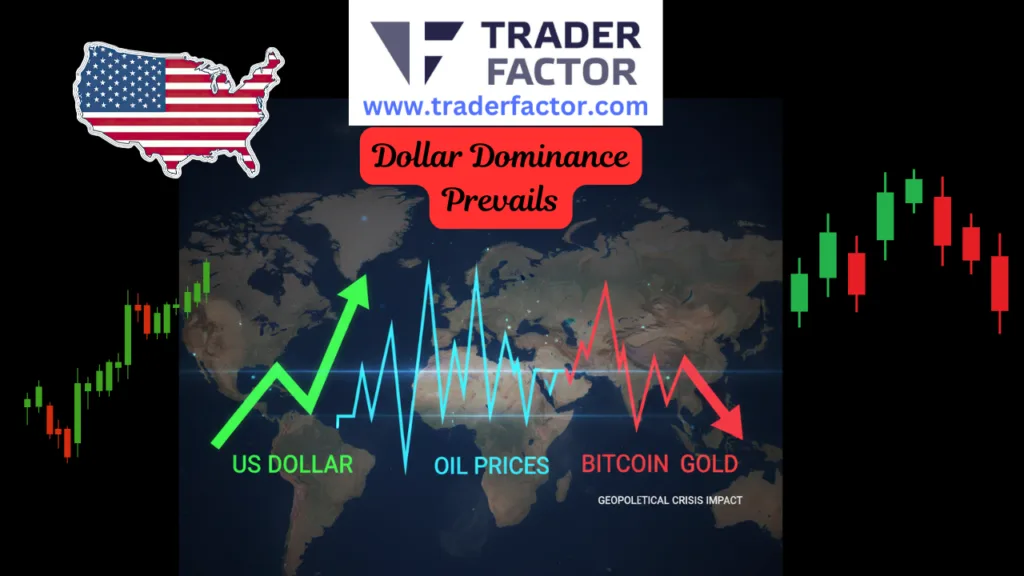
Dollar Dominance and Market Volatility Amid Middle East Conflict
With no signs of easing tensions, traders are heavily adopting a risk-off sentiment. Capital is fleeing riskier assets and flowing directly into safe-haven currencies such as the dollar. Gold price movements also reflect this panic, with the precious metal failing to sustain a bullish momentum.
This geopolitical instability directly impacts global economic growth forecasts. Rising energy costs threaten to reignite inflation, putting central banks in a difficult position. If oil prices remain elevated, expect sustained pressure on the US Dollar and a continued rally in commodity-linked assets.
Why the Dollar Index (DXY) Rises as Oil Prices Climb
When oil prices surge, as we’ve seen during the current Middle East crisis, it often sparks a chain reaction in currency markets especially for the US Dollar Index (DXY).
Here’s why:
Safe-Haven Demand: Rising oil prices typically signal global uncertainty. Investors flock to the US Dollar as a safe-haven asset, driving up the DXY.
Inflation and Rate Hikes: Higher oil prices can fuel inflation, especially in countries dependent on energy imports. This increased inflationary pressure can make the Federal Reserve consider holding rates higher for longer, supporting the value of the Dollar.
Strain on Other Economies: Countries with high energy import needs (like the eurozone and Japan) face rising costs, weakening their currencies against the Dollar.
Commodity Pricing: Since oil is priced in dollars globally, demand for the USD rises alongside oil, as countries need more dollars to buy energy.
The combination of these factors can push the DXY higher even as surging oil prices disrupt markets elsewhere, reinforcing the Dollar’s position as the world’s reserve currency.
This Week’s Economic Calendar Breakdown
Economic calendar events will dictate short-term momentum across major currency pairs. Here is the day-by-day breakdown of the most critical events you need to monitor.
Use this robust economic calendar, providing live and future data on over 1,000 economic events from 55 countries.
Monday: Chinese Inflation Data
The week kicked off with crucial economic data releases out of China. The Chinese CPI report showed inflation rising to 1.3%, beating expectations of 0.9%. Meanwhile, the PPI year-over-year came in at -0.9%, against an expectation of -1.4%.
Since China is a massive global manufacturer and consumer of raw materials, these inflation reports influence global market uncertainty and heavily impact the Australian Dollar (AUD) and New Zealand Dollar (NZD).
Tuesday: A Brief Pause
Expect a relatively quiet session across the board. No major central bank announcements or top-tier data drops are scheduled, making it a good day to focus on technical indicators for forex and adjust your stop losses.
Wednesday: US CPI Report
All eyes will be on the US Consumer Price Index (CPI) report, where market expectations sit at 2.5%.
Why does this matter? The CPI measures inflation. If the number prints higher than 2.5%, it signals that inflation is sticky. The Federal Reserve might delay cutting interest rates to cool the economy. Higher interest rates typically strengthen the US Dollar because they offer better returns for investors. Conversely, a lower-than-expected CPI could weaken the DXY further from its current 99.291 level, boosting pairs like EUR/USD and GBP/USD.
Thursday: BOE Bailey Speech and US Unemployment
Bank of England (BOE) Governor Bailey speaks on Thursday. Forex traders will dissect his words to gauge the UK’s interest rate decisions.
Hawkish tone: If Bailey hints at keeping rates high to fight inflation, expect the British Pound to surge.
Dovish tone: If he signals economic weakness or potential rate cuts, the GBP will likely face heavy selling pressure.
Dive into the world of trading with TraderFactor.com, your go-to platform for insightful market data and trading expertise. Top Stories.
We also get the weekly unemployment report from the US. Remember, last week’s Non-Farm Payrolls (NFP) report showed a major slowdown in employment. Another weak jobs number will confirm a cooling US labor market, adding bearish pressure to the Dollar.
Friday: The Ultimate Data Dump
Friday brings extreme forex market volatility with back-to-back releases:
UK GDP: This will drive GBP/USD trends, reflecting the overall health of the British economy.
Canada’s Employment Report: Crucial for the Canadian Dollar, especially alongside volatile crude oil market analysis.
US Core PCE Price Index (m/m): This is the Federal Reserve’s preferred inflation gauge. A high number pushes the Dollar up; a low number pulls it down.
US Prelim GDP and Durable Goods Orders: These metrics provide a snapshot of the global economic outlook and consumer demand.
JOLTS Job Openings & UoM Consumer Sentiment: These will give final clues about US market psychology and consumer confidence.
Market Analysis: Major Currency Pairs and Commodities
Understanding trader positioning and technical analysis is vital for spotting forex trading opportunities this week.
Discover the key strategies to pass prop firm challenge with our insightful guide on risk management, trading discipline, and market analysis.
EUR/USD Forecast
Current Price: 1.15255
The Euro is capitalizing on Dollar weakness. We are watching key support and resistance levels near the 1.15500 psychological barrier. If Wednesday’s US CPI misses expectations, expect a breakout higher. Look at moving averages to confirm the bullish trend before entering long positions.
GBP/USD Trends
Current Price: 1.33059
The Pound remains strong against the Greenback. However, Thursday’s speech by BOE Governor Bailey will determine if this rally sustains. A hawkish stance could push the pair toward the 1.34000 handle.
USD/JPY Key Levels
Current Price: 158.862
The Yen continues to struggle, pushing USD/JPY near the 159.000 level. Despite the broader risk-off sentiment, interest rate differentials between the US and Japan keep the pair elevated. Watch for potential intervention warnings from Japanese officials if the pair breaches 160.000.
Gain a competitive edge in your trading journey!
USD/CAD and Commodity Correlations
Current Price: 1.35560
The Canadian Dollar is gaining immense support from oil price trends. With WTI crude sitting at 110.815, the USD and commodity correlation is in full effect. If oil continues its upward trajectory due to the Middle East crisis, USD/CAD could easily break below support at 1.35000.
Commodities: Gold and Silver
Gold: Currently trading at an astronomical 5094. The safe-haven rush is unprecedented.
Silver: Trading at 83.378, following gold’s bullish momentum.
Expect these precious metals to remain highly bid as long as political instability effects dominate the headlines.
Stock Market & Crypto Overview: Key Sectors to Watch
Despite geopolitical tensions, equity markets are showing mixed reactions, while crypto assets remain resilient.
Stock Market Analysis
Nasdaq: 24,093.9
Dow Jones: 46,510
S&P 500: 6,608
Tech stocks in the Nasdaq continue to show strength, though rising energy costs are pressuring the manufacturing sectors within the Dow Jones. If US inflation data comes in hot on Wednesday, expect a sharp pullback in equities as investors price in a “higher for longer” interest rate environment.
Crypto Market Snapshot
Bitcoin (BTC): $67,220
Ethereum (ETH): $1,980.16
Bitcoin remains a unique asset in the current landscape. While traditionally considered a risk asset, some investors are treating it as “digital gold” amid currency war implications and massive inflation fears. Holding steady above $67,000, BTC is showing incredible relative strength against traditional fiat currencies.
Wrapping Up The Weekly Forex Market Outlook Report
This week requires strict risk management. The combination of unpredictable Middle East headlines and dense economic data releases means moving averages and Fibonacci retracement levels can be broken rapidly.
Ensure your stop-loss orders are tight, especially around Wednesday’s CPI and Friday’s PCE data.
Monitor oil prices closely. Any further attacks on energy infrastructure will immediately impact USD/CAD and broader market sentiment.
Keep an eye on BOE Bailey’s rhetoric to trade the GBP/USD effectively.
Stay updated with real-time forex news updates and currency pair analysis right here at TraderFactor.com.
Disclaimer:
All information has been prepared by TraderFactor or partners. The information does not contain a record of TraderFactor or partner’s prices or an offer of or solicitation for a transaction in any financial instrument. No representation or warranty is given as to the accuracy or completeness of this information. Any material provided does not have regard to the specific investment objective and financial situation of any person who may read it. Past performance is not a reliable indicator of future performance.
Zahari Rangelov is an experienced professional Forex trader and trading mentor with knowledge in technical and fundamental analysis, medium-term trading strategies, risk management and diversification. He has been involved in the foreign exchange markets since 2005, when he opened his first live account in 2007. Currently, Zahari is the Head of Sales & Business Development at TraderFactor's London branch. He provides lectures during webinars and seminars for traders on topics such as; Psychology of market participants’ moods, Investments & speculation with different financial instruments and Automated Expert Advisors & signal providers. Zahari’s success lies in his application of research-backed techniques and practices that have helped him become a successful forex trader, a mentor to many traders, and a respected authority figure within the trading community.
Forex scalping is a rapid-fire trading strategy where traders dive in and out of the market, seeking to capture small price movements. This technique, known for its potential to yield quick profits, demands a keen eye for detail and swift decision-making. While the allure of rapid gains is enticing, forex scalping also presents challenges such as high transaction costs and emotional stress. Traders must be able to navigate the fast-paced environment, balancing the benefits of discipline and skill enhancement against the risks of frequent trades. Dive into this dynamic world to weigh the pros and cons of forex scalping.
Understanding Forex Scalping
To truly understand forex scalping, it’s essential to recognize that it’s a trading style heavily reliant on making numerous quick transactions to profit from small market price changes. As a scalper, you need to be always on your toes, ready to capitalize on minuscule price shifts. Expert scalpers employ a variety of scalping strategies and techniques, often using scalping indicators such as MACD, RSI, and Bollinger Bands to signal potential trading opportunities.
Scalping vs. swing trading is a common debate among traders. While scalping seeks quick gains by exploiting short-term price movements, swing trading is more about capturing larger price moves over a longer timeframe. It’s essential to understand your own trading psychology and how it aligns with these different approaches.
Scalping requires a high level of discipline and focus, as a single misstep can wipe out numerous small gains. It’s a high-pressure trading style that demands constant attention and swift decision-making. To be successful, you need to develop a keen sense for market trends, a solid understanding of technical analysis, and a cool head to manage the inevitable ups and downs.
Table of Contents
Advantages of Forex Scalping
Having grasped the essence of forex scalping, it’s equally important to unpack the advantages this trading style offers. Firstly, the discipline and emotional control required in scalping can enhance your trading skills. Mastery of these attributes can significantly improve your overall trading performance.
Scalping demands quick identification of trading opportunities. You’re continually on the lookout for small price movements, which can hone your analytical skills. This rapid reaction to market fluctuations can be a valuable asset in your trading toolbox.
Moreover, the leverage and position size in scalping can boost your profitability. Even the smallest price movements can yield substantial returns when leveraged correctly. However, it’s crucial to manage leverage effectively to avoid excessive losses.
Scalping is also well-suited to ECN forex accounts. These accounts offer low spreads and high-speed execution, which are ideal for the quick trades characteristic of scalping.
Advantage
Description
Impact
Discipline and Emotional Control
Required in scalping, enhances trading skills
Improved trading performance
Quick Identification
Rapid reaction to market fluctuations
Enhanced analytical skills
Leverage and Position Size
Boosts profitability
Higher potential returns
ECN Forex Accounts
Ideal for scalping, offer low spreads and high-speed execution
Increased trading efficiency
Small Price Movements
Yield substantial returns when leveraged correctly
Improved profitability
Disadvantages of Forex Scalping
While forex scalping can seem enticing with its potential for quick returns, it’s not without its pitfalls and difficulties. One of the key disadvantages lies in transaction costs. Given the high volume of trades, even small broker fees can quickly accumulate, eating into your profits.
Scalping also requires exceptional emotional control. As a scalper, you’re constantly on your toes, making quick decisions, which can be emotionally draining. Without the right mindset, you risk making impulsive decisions that could lead to losses.
Your technical analysis skills also need to be on point. Since scalping involves making quick trades based on small price changes, you need to be adept at reading and interpreting charts and indicators. A misread can result in a loss.
Risk tolerance is another factor. The fast-paced nature of scalping means you need to be comfortable with taking on risk. If you’re not, the anxiety could impact your decision-making.
Here’s how it works. You’ll use the EMA indicator, a type of moving average that gives more weight to recent price data. This indicator helps determine the direction of the market’s trend. Alongside the EMA, you’ll utilize the Stochastic indicator. This tool identifies overbought and oversold conditions in the market, alerting you to potential reversal points.
When you spot a trend using the EMA, you’ll then seek out mean reversing moves with the Stochastic indicator. This is where you’ll look for price reversals within the trend, providing opportunities for short term trading. But remember, like all trading strategies, the 1-Minute Scalping Technique isn’t foolproof. It requires careful monitoring of the market and swift decision-making. So, keep practicing and refining your strategy to maximize your forex scalping success.
Rules for a Long Entry
After mastering the basics of the 1-Minute Scalping Technique, you’re ready to understand the specific rules for a long entry in forex scalping. A long entry is essentially a buy order, aiming to profit from the currency pair’s increase.
Let’s dive into the five essential long entry strategies:
Identify the currency pair that is trending upwards, as indicated by technical indicators for scalping such as moving averages or Bollinger Bands.
Look for pullback opportunities in scalping. A pullback occurs when the price retraces back to a significant level before resuming the initial uptrend.
Monitor for overbought and oversold conditions in scalping. An overbought condition implies a potential downward reversal, while an oversold condition signals a possible upward reversal.
Maintain a keen eye on market entry points. The perfect timing of your trades is crucial in scalping due to its high frequency.
Never underestimate the importance of order execution speed in scalping. A delay of even a few seconds can turn a profitable trade into a loss.
Rules for a Short Entry
Just as a long entry aims to profit from upward trends, a short entry in forex scalping is your strategic move to capitalize on downward price movements. It’s a critical part of your scalping strategy that requires a keen eye on scalping indicators and an understanding of short entry rules.
Here’s a simple table to guide your short entry:
Step
Rule
Indicator
1
Identify bearish trend
Price below moving average
2
Wait for price pullback
Price touches moving average
3
Confirm bearish signal
Oscillator turns downward
Scalping execution speed is critical in this process. Swift, strategic moves ensure you can exploit these downward trends effectively. But remember, scalping risk management is equally crucial. Despite the speed, don’t let any trade risk more than a small percentage of your capital.
Forex Scalping Risks
Like any other trading style, forex scalping carries certain risks that you need to be aware of. It’s a high-speed trading technique with the potential for quick profits, but it’s also susceptible to rapid losses. You must understand these risks to make informed decisions and protect your investments.
Leverage Risks: Using leverage can multiply your profit potential but can also magnify losses. Misuse of leverage can quickly deplete your trading account.
High Frequency of Trades: The frequent buying and selling in scalping increase exposure to market volatility. Any sudden market movement can lead to significant losses.
Dependence on Market Conditions: Scalping is most effective in stable markets. High volatility can disrupt your strategy and lead to losses.
Emotional Stress: This trading style requires constant attention and quick decision-making, which can lead to stress and poor decisions.
Broker Restrictions: Not all brokers allow scalping. Restrictions from your broker can limit your trading activities and affect your profit potential.
Effective risk management is crucial for successful forex scalping. Understand these risks, design strategies to mitigate them, and always be prepared for unexpected market changes.
Special Considerations for Scalpers
When embarking on a forex scalping strategy, there are specific considerations you need to bear in mind to enhance your chances of success. A key factor is execution speed. Forex scalping is a fast-paced trading style where success depends on rapid decision-making and trade execution. Therefore, a robust and responsive trading platform is critical to keep up with the market’s speed.
Leverage considerations and risk management are two other vital aspects. You’ll need to use leverage wisely to maximize profits while minimizing potential losses. Implementing risk management techniques, such as setting stop loss and take profit levels, help to control your exposure to risk.
Choosing the right broker is also crucial. Not all brokers accommodate scalping strategies, so it’s essential to select a broker that supports your trading style and offers competitive spreads and commissions.
Here’s a summary table for quick reference:
Consideration
Importance
Strategy
Execution Speed
High
Select a fast, reliable platform
Leverage
Balanced
Use wisely to maximize gains and minimize losses
Risk Management
Critical
Set stop loss and take profit levels
Broker Selection
Crucial
Choose a broker that supports scalping and offers competitive terms
Best Forex Scalping Brokers
Choosing the right broker for your forex scalping endeavors is crucial, as not all platforms are friendly to this fast-paced style of trading. You need a broker who understands the nuances of forex scalping strategies and offers the best scalping indicators.
Comparing scalping vs day trading, the latter is more tolerant of broker shortcomings. Scalping, however, requires tight spreads, fast execution, and a robust platform. Look for brokers who understand scalping risk management and offer trading on the top forex scalping pairs.
As for the top brokers, OneRoyal and ActivTrades are popular choices. eToro offers a social trading platform, enabling you to learn from experienced scalpers. Plus500 is known for its tight spreads and a wide range of forex pairs.
But don’t just take our word for it. Do your homework. Look for brokers providing high-speed execution, low spread, and the flexibility to implement your scalping strategies. Check their customer reviews, regulatory standing, and trading conditions.
Frequently Asked Questions
Is scalping in forex profitable?
Scalping in forex can be profitable for traders who employ effective forex scalping strategies and maintain a disciplined approach. Successful forex scalpers rely on quick decision-making and a deep understanding of market fluctuations to capture small price movements in the forex market.
What is a scalper in forex?
A scalper in forex is a trader who uses scalp trading forex techniques to make profits from small price changes. These traders execute a high volume of trades within short time frames, often utilizing a forex scalping chart to identify opportunities.
Is forex scalping good for beginners?
Forex scalping for beginners can be challenging due to the fast-paced nature of scalp trading forex. However, with proper education on forex scalping techniques and strategies, beginners can develop a profitable forex scalping strategy over time.
Can you be rich in scalping?
While scalping forex can be lucrative, becoming rich solely through forex scalping requires significant expertise, a keen eye for detail, and access to the best forex broker for scalping. Consistent success in scalping the forex market often hinges on discipline and adept risk management.
How many pips do scalpers make?
Scalpers typically aim to capture anywhere from 5 to 10 pips per trade, though the actual number can vary depending on market conditions and the forex scalping strategy used. Each pip gained can contribute to overall profitability when trading frequently.
What are the disadvantages of scalping?
One of the primary disadvantages of scalping forex is the high level of stress and concentration required. Additionally, transaction costs can add up quickly, impacting profitability unless managed carefully through the best forex broker scalping platforms.
Why don’t brokers like scalping?
Some brokers may not favor scalping because it generates a high volume of trades, which can strain their systems. Moreover, the rapid execution of trades can sometimes lead to issues with liquidity and slippage, making it challenging for brokers to manage.
Which is better, scalping or trading?
The choice between scalping forex and other forms of trading depends on individual trading styles and time availability. Scalping the forex market offers quick profits, but requires constant attention, whereas longer-term trading might be more suitable for those seeking less intensity.
How long should scalping last?
Forex scalping trades are typically held for a few seconds to several minutes, as the goal is to capitalize on small price movements. The short duration of trades is a hallmark of the forex scalping strategy.
Which forex is best for scalping?
Major currency pairs like EUR/USD and GBP/USD are often preferred for scalping forex due to their high liquidity and tight spreads. These pairs provide frequent trading opportunities essential for successful forex scalpers.
Which strategy is best for scalping?
A profitable forex scalping strategy often involves a combination of technical analysis, such as using forex scalping indicators, and quick execution of trades. Traders might also use the 1 minute scalping strategy for rapid entry and exit.
How many trades do scalpers do in a day?
Forex scalpers can execute dozens to hundreds of trades in a single day, depending on market conditions and their specific forex trading scalping strategies. The high frequency is a key component of their approach to capturing profits.
Is forex scalping risky?
Forex scalping is inherently risky due to the fast-paced nature of the market and the potential for rapid losses. However, effective risk management and the use of a reliable forex scalping indicator can mitigate some of these risks.
What is the most successful scalping indicator?
Many successful forex scalpers rely on indicators like moving averages, Bollinger Bands, and the RSI to identify short-term trading opportunities. The choice of indicator often depends on the trader’s specific forex scalping techniques.
Which timeframe is best for scalping?
The 1-minute to 5-minute timeframes are often used in scalping forex to capture quick price movements. These shorter timeframes allow traders to quickly enter and exit positions, vital for a successful forex scalping strategy.
What is the 1-minute forex strategy?
The 1-minute forex strategy involves analyzing forex scalping charts on a minute-by-minute basis to identify and capitalize on small market movements. It requires quick decision-making and precise timing to execute trades effectively.
How do you win scalping?
Winning at scalping forex involves a combination of using effective forex trading scalping strategies, maintaining discipline, and employing the best forex broker for scalping. Consistent practice and analysis are key to improving performance.
What type of chart is best for scalping?
Candlestick charts are often favored by forex scalpers as they provide detailed information on price movements and can help in pinpointing entry and exit points. Scalping forex charts that reflect real-time data are essential for this trading style.
How do I start scalping?
To start scalping forex, familiarize yourself with various forex scalping strategies and techniques, and practice on a demo account. Choose a broker that supports scalping and offers competitive spreads and fast execution to enhance your trading experience.
What are the golden rules for scalping?
Golden rules for scalping include maintaining discipline, using effective risk management, and sticking to a proven forex scalping strategy. Additionally, successful forex scalpers often emphasize the importance of staying informed about market conditions and trends.
Disclaimer:
All information has been prepared by TraderFactor or partners. The information does not contain a record of TraderFactor or partner’s prices or an offer of or solicitation for a transaction in any financial instrument. No representation or warranty is given as to the accuracy or completeness of this information. Any material provided does not have regard to the specific investment objective and financial situation of any person who may read it. Past performance is not a reliable indicator of future performance.
Zahari Rangelov is an experienced professional Forex trader and trading mentor with knowledge in technical and fundamental analysis, medium-term trading strategies, risk management and diversification. He has been involved in the foreign exchange markets since 2005, when he opened his first live account in 2007. Currently, Zahari is the Head of Sales & Business Development at TraderFactor's London branch. He provides lectures during webinars and seminars for traders on topics such as; Psychology of market participants’ moods, Investments & speculation with different financial instruments and Automated Expert Advisors & signal providers. Zahari’s success lies in his application of research-backed techniques and practices that have helped him become a successful forex trader, a mentor to many traders, and a respected authority figure within the trading community.