Trading View Tickers

Tuesday, 7 October 2025

How Do I Calculate My Lot Size in Forex

How Do I Calculate My Lot Size in Forex? Did you know that nearly 96% of new Forex traders lose their entire investment within the first six months?. Whether you’re new to trading or a seasoned pro, getting this part right is crucial for managing risks and maximizing gains. Lot size isn’t just about numbers; it’s the foundation of forex trading.


Hence, understanding this element of Forex trading can significantly decrease your potential risk, and it’s not as complicated as you might think. So, how do you determine the right lot size for your trades?

In this discussion, we’ll break down the process of calculating lot sizes in forex trading. We’ll make it easy to understand, giving you practical tips to make smart decisions that suit your trading style and risk tolerance.

Keep on reading.

Basic Terminology in Forex Trading

Before you can start calculating lot size in Forex, you need to be familiar with the basic terms used in this field. Let’s take a moment to clarify some key Forex terminology. Understanding these terms will make your trading journey easier and more effective.

First, ‘Currency Pairs’ refers to the two currencies involved in a Forex trade. The first one, known as the base currency, is the one you’re buying or selling while the second, the quote currency, is the one you’re using to buy or sell the base currency.

On the other hand, ‘Trading Platforms’ are software applications where you execute your trades. They provide real-time price quotes and charting tools, helping you make informed decisions.

Then, ‘Trading Platforms’ are software where trades occur. Choose one that suits your trading style and experience.

Other important terms include ‘Pip’, the smallest price move a currency pair can make, and ‘Leverage’, which allows you to control larger positions with a smaller amount of money.

 ‘Margin’ is the money required to open a leveraged position. Understanding these terms will enhance your trading experience.

Understanding Forex Lot Size

Trade Confidently with the Best Regulated Brokers

Often, you’ll find that understanding Forex lot size is necessary for successful trading, as it affects the risk you’re willing to take. Imagine it as the number of currency units you’re trading in a Forex deal. The larger your lot size, the more exposed you are to market fluctuations, translating into higher potential profits or losses.

As you delve deeper into trading, you’ll notice the impact of currency pairs on the Forex market dynamics. The exchange rate between two currencies can drastically change your trading outcome. For instance, if you’re trading a large lot size in a volatile currency pair, you could experience significant profit or loss based on minor price movements.

MT5

The Forex market is a dynamic beast, constantly reacting to economic news, geopolitical events, and market sentiment. Understanding how currency pairs impact these dynamics is essential. You’ve got to be on your toes, ready to adjust your lot size according to market volatility.

Importance of Lot Size in Trading
Forex Market Today Gold Prices, Currencies, and Stock Markets-TraderFactor

Now that you’ve grasped how currency pairs impact your trading outcomes, let’s explore why the lot size is so important in trading. The Lot Size Significance can’t be overstated. It influences the level of risk you’re exposed to and ultimately, your potential profits or losses.

Choosing the right lot size is integral to Trading Efficiency. A larger lot size increases your potential profit, but it also raises the risk. Conversely, a smaller lot size reduces both your potential profit and risk. Therefore, you need to find a balance that suits your risk tolerance and trading strategy.

IronFX

Neglecting to understand the importance of lot size can lead to devastating consequences. Suppose you’re overzealous and opt for a large lot size without the necessary capital. In that case, you can quickly deplete your account when the market moves against you.

Step-by-Step Lot Size Calculation

TraderFactor Forex Guides

Let’s jump straight into the process of calculating lot size in Forex trading. Understanding this concept and its impact on your trades. Lot size directly influences your risk level and potential profit or loss. So it’s something you should always get right.

First, determine your risk tolerance. This is the amount of money you’re comfortable potentially losing per trade. The rule of thumb is not to risk more than 1-2% of your account balance.

Next, calculate the stop loss in pips. This is the difference between your entry price and stop loss price. The significance of pip value in this calculation can’t be overstated.

Trade Safe and Smart with ActivTrades

Then, compute the pip value. In most cases, a pip is the smallest change in a currency pair’s exchange rate. To find the pip value in terms of your account currency, divide one pip in decimal form (usually 0.0001) by the exchange rate of the quote currency to your account currency.

Tips for Effective Lot Size Management

Forex Market Outlook: This Week in the Markets

Now, let’s move on to some handy tips for managing your lot size effectively and how to implement risk management strategies. By mastering these, you’ll be going a long way towards secure and profitable trading.

Managing Forex Lot Sizes

In forex trading, understanding and managing lot sizes effectively can significantly impact your success. Lot size variations are the different amounts of currency you can trade in the forex market. Forex margins, on the other hand, are like a good faith deposit to maintain open positions. This margin balance is constantly updated with unrealized gains or losses. Here’s a quick table to break it down:

 Lot Size VariationsForex Margins Explained
Micro1,000 unitsSmall deposit required
Mini10,000 unitsModerate deposit
Standard100,000 unitsLargest deposit

Knowing your lot sizes and margins helps you manage risk. You’re less likely to overextend your account or take on more risk than you’re comfortable with. So, grasp these concepts and trade wisely.

Implementing Risk Management

It’s also necessary to have a solid risk management strategy in place to effectively manage your lot sizes. This includes understanding risk mitigation and developing a coherent trading strategy.

8eightcap

Risk mitigation involves managing your potential losses. Don’t risk more than you can afford to lose. It’s also essential to set stop-loss orders to limit potential losses. This way, you’re not constantly watching the market, which can lead to emotional decisions.

Your trading strategy should be consistent and fit your risk profile. Don’t abruptly change your lot size based on a hunch. Instead, adjust gradually based on market trends. This approach helps maintain balance in your trading account and reduces the chance of significant losses.

Common Mistakes in Lot Size Calculation

Advertise with us. Opportunities for Brokers, Crypto Exchanges/Wallets and Prop Trading Firms.

Even experienced traders often make mistakes when calculating lot size, which can significantly impact forex profitability and risk management. One of the most common lot misconceptions is thinking bigger is always better. You might be tempted to trade larger lots, hoping for larger profits, but this can quickly lead to significant losses.

Another common mistake is ignoring the risk-reward ratio. You shouldn’t just focus on potential profits, but also consider the potential losses. If you’re risking too much for a small potential gain, you’re setting yourself up for failure.

IronFX

Overtrading is another pitfall you need to avoid. Overtrading risks are real and can quickly erode your trading capital. It’s easy to fall into the trap of making numerous trades in a short time, especially when the market is volatile. However, this can lead to poor decision-making and increased risk.

Lastly, don’t ignore the market conditions. Market volatility can significantly affect the appropriate lot size. If the market is highly volatile, it might be wise to trade smaller lot sizes to limit potential losses. Remember, successful trading isn’t just about making profits, but also about effective risk management.

Frequently Asked Questions

Who are the 10 Best Regulated Forex Brokers With the Highest Leverage?

What Is the Risk Associated With Trading in Large Forex Lot Sizes?

Trading in large forex lot sizes increases your risk due to market volatility. If you misuse leverage, you’re vulnerable to larger losses. It’s crucial to manage your risk to maintain your trading account’s health.

How Does a Change in the Exchange Rate Affect My Lot Size in Forex Trading?

When exchange volatility occurs, rate fluctuations can impact your lot size in forex trading. A rising exchange rate might decrease your lot size, while a falling rate could increase it. It’s a dynamic process.

BullWaves Prop - A real prop firm experience

Is There a Minimum or Maximum Lot Size in Forex Trading?

Yes, there’s variability in lot size in forex trading. However, there’s also restrictions. Typically, the minimum lot size is 0.01 (micro) and the maximum depends on the broker’s policy and your account equity.

Are There Specific Strategies for Choosing the Right Lot Size in Forex Trading?

Yes, there are strategies for choosing the right lot size in Forex trading. You’ll want to consider lot size variations and Forex diversification to mitigate risk and increase potential profits. It’s all about balance.

How Does Lot Size Impact the Profitability in Forex Trading?

Lot size directly affects your profitability metrics in forex trading. A larger lot size increases potential profits but also risks. It’ll also raise your trading volume, which can impact the market’s perception of the currency’s value.

Conclusion

In conclusion, understanding your Forex lot size is a must to trading successfully. Grasping the key terms and correctly calculating your lot size can save you from considerable losses. Avoid common mistakes and employ effective lot size management tactics. Remember, it’s not just about the trades you make, but also how much you’re willing to risk.


  • Disclaimer:

    All information has been prepared by TraderFactor or partners. The information does not contain a record of TraderFactor or partner’s prices or an offer of or solicitation for a transaction in any financial instrument. No representation or warranty is given as to the accuracy or completeness of this information. Any material provided does not have regard to the specific investment objective and financial situation of any person who may read it. Past performance is not a reliable indicator of future performance. 

    FOLLOW US

    Author

    • Zahari Rangelov

      Zahari Rangelov is an experienced professional Forex trader and trading mentor with knowledge in technical and fundamental analysis, medium-term trading strategies, risk management and diversification. He has been involved in the foreign exchange markets since 2005, when he opened his first live account in 2007. Currently, Zahari is the Head of Sales & Business Development at TraderFactor's London branch. He provides lectures during webinars and seminars for traders on topics such as; Psychology of market participants’ moods, Investments & speculation with different financial instruments and Automated Expert Advisors & signal providers. Zahari’s success lies in his application of research-backed techniques and practices that have helped him become a successful forex trader, a mentor to many traders, and a respected authority figure within the trading community.

Thursday, 2 October 2025

Understanding Profit in Terms of Pips in Forex Trading

As a forex trader, you’re constantly dealing with these pips, the petite seeds of your potential wealth. It’s the smallest unit of price movement in foreign exchange trading and grows to have a significant impact on your profits. Yet, many traders overlook the importance of fully understanding these crucial components of the forex market. Understanding the concept of profit is essential for every trader seeking success in the market. One fundamental aspect of gauging profitability in Forex trading revolves around the measurement unit known as pips.


Hence, understanding profit in terms of pips not only provides traders with a standardized method of measurement but also offers valuable insights into the intricacies of Forex markets and the potential profitability of trading strategies.

Isn’t it time you explore the use of pips in forex profit?

Defining Pips in Forex Trading

In Forex trading, you’ll often hear the term ‘pips’, a crucial concept to grasp for understanding profit and loss in your trades. ‘Pip’ stands for ‘point in percentage’, and it’s essentially the smallest value by which a currency quote can change. Usually, most major currency pairs are priced to four decimal places, so a pip is a change in the last decimal point.

Now, let’s dive into ‘Pip Variations’. Not all currency pairs have the same pip value. The standard pip value for a USD-based pair like USD/CAD is $0.0001 for a micro lot. But if you’re trading a pair like EUR/JPY, the pip value can change. Calculating these variations is important to understand your potential profit or loss.

Similarly, ‘Pip Spreads’ play a vital role in Forex trading. The spread is the difference between the buy and sell price of a currency pair, measured in pips. Brokers use spreads to make money, so you’ll want to find a broker with competitive spreads. Remember, the smaller the spread, the less you’ll have to overcome in profit to break even or make money.

Building on your understanding of pips in forex, it’s crucial to grasp their importance in Forex trading as these tiny fluctuations can significantly impact your profitability. As the smallest change a price pair can make, pip fluctuations can either make or break your trading game.

Here’s why pips matter so significantly:

  • Pip Fluctuations: These are what make Forex trading possible. You’re betting on these tiny changes in currency value. Pip fluctuations can be your best friend when they’re in your favor, or your worst enemy when they’re not.
  • Predicting Fluctuations: If you can accurately predict pip fluctuations, you’ll be in a strong position to profit. It’s all about buying low and selling high.
  • Risk Management: Pip fluctuations also help in assessing risk. By understanding potential pip changes, you can set stop-loss and take-profit levels effectively.
  • Pip Spread: This is the difference between the bid and the ask price. It’s how Forex brokers make their money. The lower the spread, the less you have to overcome to start making a profit.
  • Choosing a Broker: A broker with a low pip spread can make a significant difference in your profitability.

In the end, understanding and managing pips are essential to successful Forex trading.

Calculating Pips in Forex Value

EURUSD Consolidates Gains Ahead of Nonfarm Payrolls-TraderFactor

Let’s dive into how to calculate pip value, a crucial step that can significantly alter your Forex trading strategy and profitability. You see, the value of a pip varies depending on the Forex pair you’re trading. Understanding this Pip Variation Impact is essential in making accurate Forex Pip Predictions.

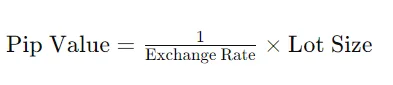
To calculate the pips in forex value, you’ll usually divide one pip (0.0001 for most currency pairs) by the exchange rate. Then, multiply the result by the lot size.

Here’s a simple table to illustrate:

Forex PairPip Value (per lot)
EUR/USD10 USD
USD/JPY1000 JPY
GBP/USD10 USD
USD/CHF10 CHF
EUR/GBP10 GBP

This table represents pip values for different Forex pairs per standard lot (100,000 units).

Understanding Forex Profit and Loss

Stock Market Mixed as Tech Giants Drive Gains Ahead of Key Jobs Data

Now, let’s move on to understanding Forex profit and loss.

It’s essential to know how to calculate your pips in Forex profit and comprehend the nature of Forex loss.

Additionally, understanding the value of pips in Forex will give you a clearer picture of your financial gains or losses.

Calculating Forex Profit

Profit margin exploration involves understanding the financial dynamics between the selling price and the cost of the traded currency pairs. It’s crucial to know how much profit you’re making on each trade relative to the costs involved.

To calculate your Forex profit accurately, you need to follow a systematic approach:

Determine the Pip Value
A pip is a unit of measurement for currency movement, and its value varies depending on the currency pair being traded and the lot size. To determine the pip value in your trading currency, you can use the formula:

Calculating Profit or Loss
To calculate your profit or loss on a trade, you subtract the opening price from the closing price and then multiply the result by the pip value and the lot size. The formula is:

Trade Confidently with the Best Regulated Brokers

Exploring Forex Scalping Techniques

Forex scalping involves making numerous small trades to accumulate profits over short time frames. Here are some key aspects of effective scalping techniques:

Short-term Trading Strategies
Scalpers focus on short-term movements in currency prices, often holding positions for only a few minutes or even seconds. They rely on technical analysis, such as chart patterns and indicators, to identify short-term trading opportunities.

Utilizing Leverage
Leverage allows traders to control larger positions with a smaller amount of capital. While it can magnify profits, it also increases the potential for losses. Effective risk management is crucial when using leverage in Forex scalping.

By following these steps, you can accurately assess your Forex profit or loss and manage your trading activities more effectively. It’s essential to understand the concepts of profit margin exploration, employ effective scalping techniques, and use proper calculation methods to succeed in Forex trading. Additionally, risk management should always be a priority to mitigate potential losses.

Practical Examples of Pips in forex and Profit

TraderFactor Forex Guides

Let’s dive right into some real-world examples to better grasp how pips and profit work in forex trading.

Suppose you’ve bought EUR/USD at 1.1250 and it moves up to 1.1270. That’s a 20 pip increase. If you’re trading one standard lot, which is 100,000 units, each pip is worth $10. So your profit would be $200 (20 pips x $10).

Pips in forex fluctuation impact comes into play here. If the rate had dropped to 1.1230, that’s a 20 pip decrease, leading to a $200 loss. Understanding the pip fluctuation impact can help you manage your trading risk.

Now, let’s consider pip strategy optimization. If you’d set a stop loss at 1.1240 and a take profit at 1.1260, you’d have limited your potential loss to 10 pips and secured a potential profit of 10 pips. That’s a 1:1 risk/reward ratio, which is a key aspect of pip strategy optimization.

Understanding Forex Loss

Just as you calculate profit in Forex trading, understanding potential losses is equally important for a balanced trading strategy. Losses can have a significant psychological impact, potentially affecting your ability to make rational decisions. Implementing loss mitigation strategies, such as stop-loss orders, can help manage these risks.

Forex Trading FactorPotential ProfitPotential Loss
Price IncreaseGainNone
Price DecreaseNoneLoss
Stop-Loss OrderLimits GainCaps Loss
No StrategyUnlimited GainUnbounded Loss

You’ll notice that without a strategy, losses can be unlimited. This highlights the importance of loss mitigation strategies. Remember, it’s not just about making profits, but also about limiting losses to sustain your trading activity.

Stock Market Wraps The Week With Mixed Results

Pips Value in Forex

Often, you’ll hear traders talk about ‘pips’ – a critical concept that you’ll need to grasp to accurately calculate your profits and losses in Forex trading. Understanding the value of pips in Forex is fundamental.

You’ll find that pip fluctuations impact your trading performance. Consider Pip’s role in strategy, which is;

  • Crucial in determining entry and exit points.
  • Helps in setting stop-loss and take-profit levels.
  • Assists in managing risks and rewards.

Tips for Using Pips in forex Effectively

Who are the 10 Best Regulated Forex Brokers With the Highest Leverage?

Harnessing the power of pips in forex trading can significantly enhance your profit margins if you follow a few key tips.

To use pips effectively, consider the following:

To use pips effectively, consider the following:

Pip Strategy Optimization

  • This is all about adjusting your trading strategy according to pip movements.
  • Be flexible and adjust your trading plan based on pip fluctuations.
  • Analyze historical pip movements to predict future trends.
  • Use technical analysis tools to identify pip patterns and make informed decisions.

BullWaves Forex Broker

Pip based Risk Management

  • This involves controlling potential losses by determining the number of pips you’re willing to risk on each trade.
  • Decide your stop-loss orders in pips.
  • Use a risk-reward ratio to determine how many pips are worth risking for potential gain.
  • Regularly evaluate your risk tolerance in pips to maintain a balanced portfolio.

Regular Practice: Despite having a good strategy, practice is key to success.

VS Capital & TraderFactor offer traders an exclusive 10% deposit bonus. Start trading with more power and confidence. Sign up now to claim your bonus!

Conclusion

Understanding pips is fundamental in forex trading. They’re the measure of your profit or loss. Knowing how to calculate pip value helps you manage risk effectively. By linking pips to your profit and loss, you’re better equipped to make informed trading decisions. Remember, practice makes perfect – the more you trade, the more proficient you’ll become at using pips effectively. So, keep sharpening your skills for successful trading!


  • Disclaimer:

    All information has been prepared by TraderFactor or partners. The information does not contain a record of TraderFactor or partner’s prices or an offer of or solicitation for a transaction in any financial instrument. No representation or warranty is given as to the accuracy or completeness of this information. Any material provided does not have regard to the specific investment objective and financial situation of any person who may read it. Past performance is not a reliable indicator of future performance. 

    FOLLOW US

    Author

    • Zahari Rangelov

      Zahari Rangelov is an experienced professional Forex trader and trading mentor with knowledge in technical and fundamental analysis, medium-term trading strategies, risk management and diversification. He has been involved in the foreign exchange markets since 2005, when he opened his first live account in 2007. Currently, Zahari is the Head of Sales & Business Development at TraderFactor's London branch. He provides lectures during webinars and seminars for traders on topics such as; Psychology of market participants’ moods, Investments & speculation with different financial instruments and Automated Expert Advisors & signal providers. Zahari’s success lies in his application of research-backed techniques and practices that have helped him become a successful forex trader, a mentor to many traders, and a respected authority figure within the trading community.